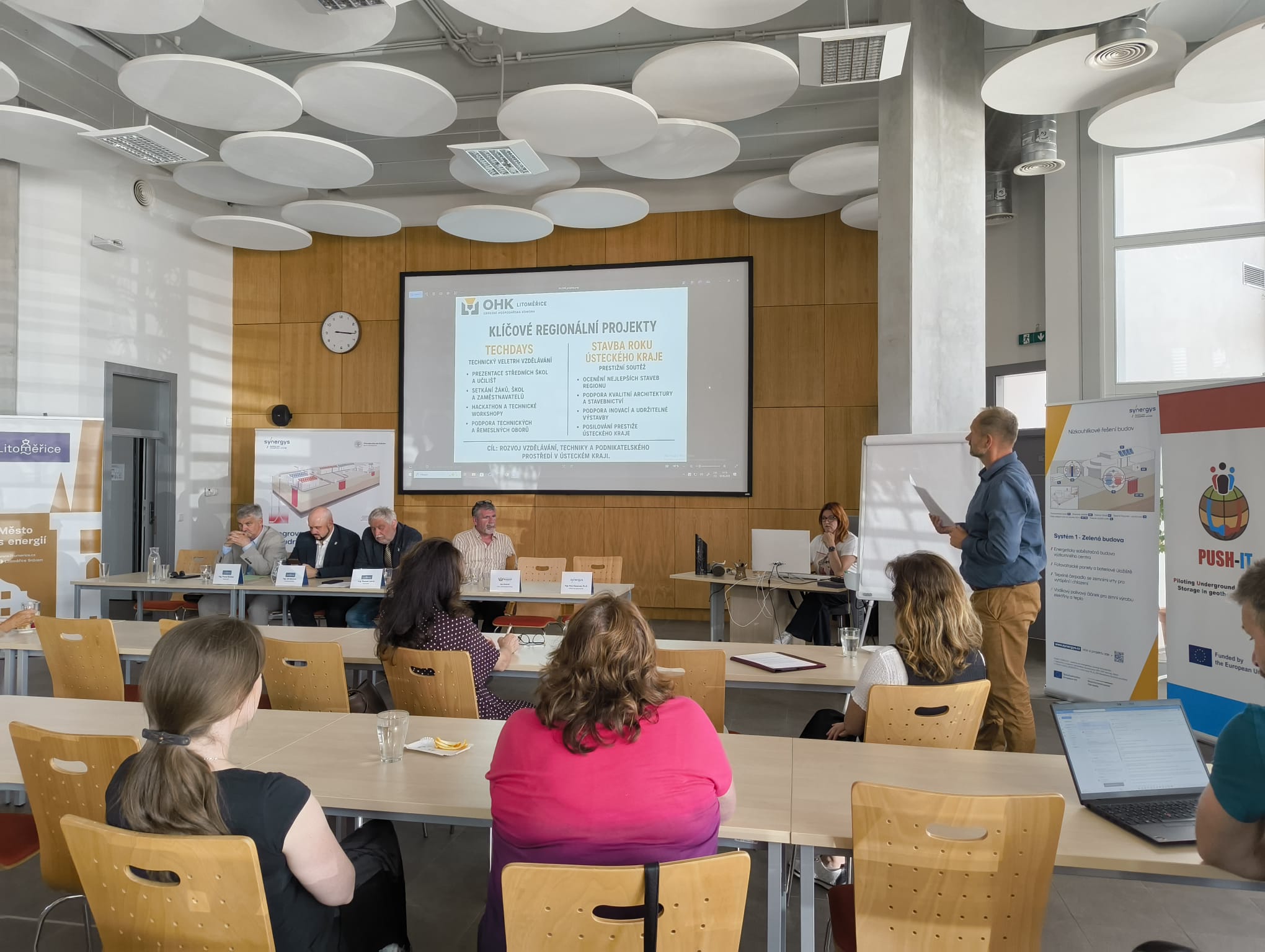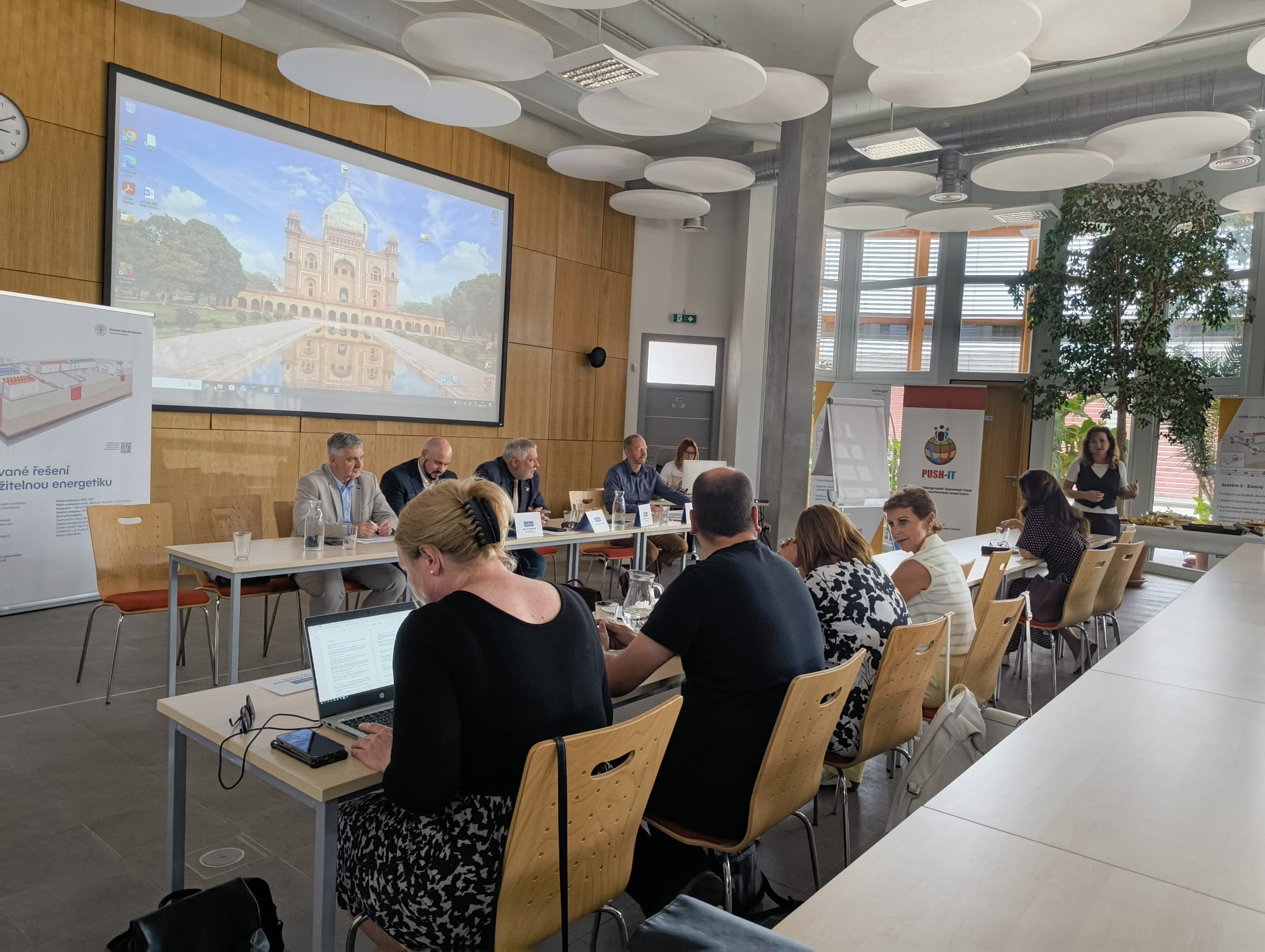

The meeting demonstrated that open dialogue between city hall, the business sector, and the nonprofit sector is key to the region’s development. “Business owners need timely and clear information about what the city is planning and where Litoměřice is headed. Only through open communication can they respond effectively to changes, take advantage of new opportunities, and serve as partners in the city’s further development,” said Litoměřice Mayor Radek Löwy in his opening speech, during which he also summarized the most important projects already completed.
From Transportation to Waste Management
Deputy Mayors Jiří Adámek and Petr Panaš outlined the most significant investments for the coming years. In the area of transportation, the upcoming high-speed rail line with a future direct connection to Prague, the eastern bypass, and the western road were of particular interest. The repair of the Tyrš Bridge was also mentioned; due to its dilapidated condition, the first phase of this project will begin this summer under the supervision of the Road and Motorway Directorate (ŘSD), with partial closures. A complete reconstruction of the bridge is then planned for 2033.
In addition to investments in sports, culture, education, and housing construction by private developers, there was also discussion of new developments in the social and waste management sectors. Deputy Mayor Petr Panaš highlighted the planned introduction of a chip-based system for waste bins, which will also affect legal entities. This is because businesses are required to have their own bins for their operations. He also mentioned the emerging reuse center and a new, larger collection site on the grounds of the former barracks near Radobýl.
City Clerk Pavel Richter then briefed on the implications of the upcoming amendment to the Building Act and the restructuring of building authorities.
A key item on the agenda was the presentation of the activities of the District Chamber of Commerce. Its representative, Jan Dostál, emphasized the effort to establish even closer ties with city leadership. “Our intention is to strengthen our connection with the city, for example by creating a joint commission as an advisory body to the city council. This would facilitate an open discussion about what kind of support entrepreneurs need and how the city and the Chamber of Commerce can help them,” explained Dostál.
Why did business leaders and representatives of the nonprofit sector attend?
The forum attracted a diverse range of participants—from representatives of established organizations to new residents who wanted to get a sense of what’s happening in Litoměřice.
Representatives from the nonprofit sector also came to learn about the city’s future direction: “We’re interested in what’s happening in the city so we know where we can get involved, what might affect us, and what could be an opportunity for us. Some social service buildings are connected to the city’s district heating system, so we’re also interested in the use of geothermal energy.”
Another participant came to the event out of curiosity: “I’ve been living in Litoměřice for two years and had no idea about the RINGEN research center, even though I live just a short distance away. I came, among other things, to learn about the advantages and disadvantages of geothermal energy,” he shared his impressions.
Exploring the RINGEN Center and Geothermal Energy
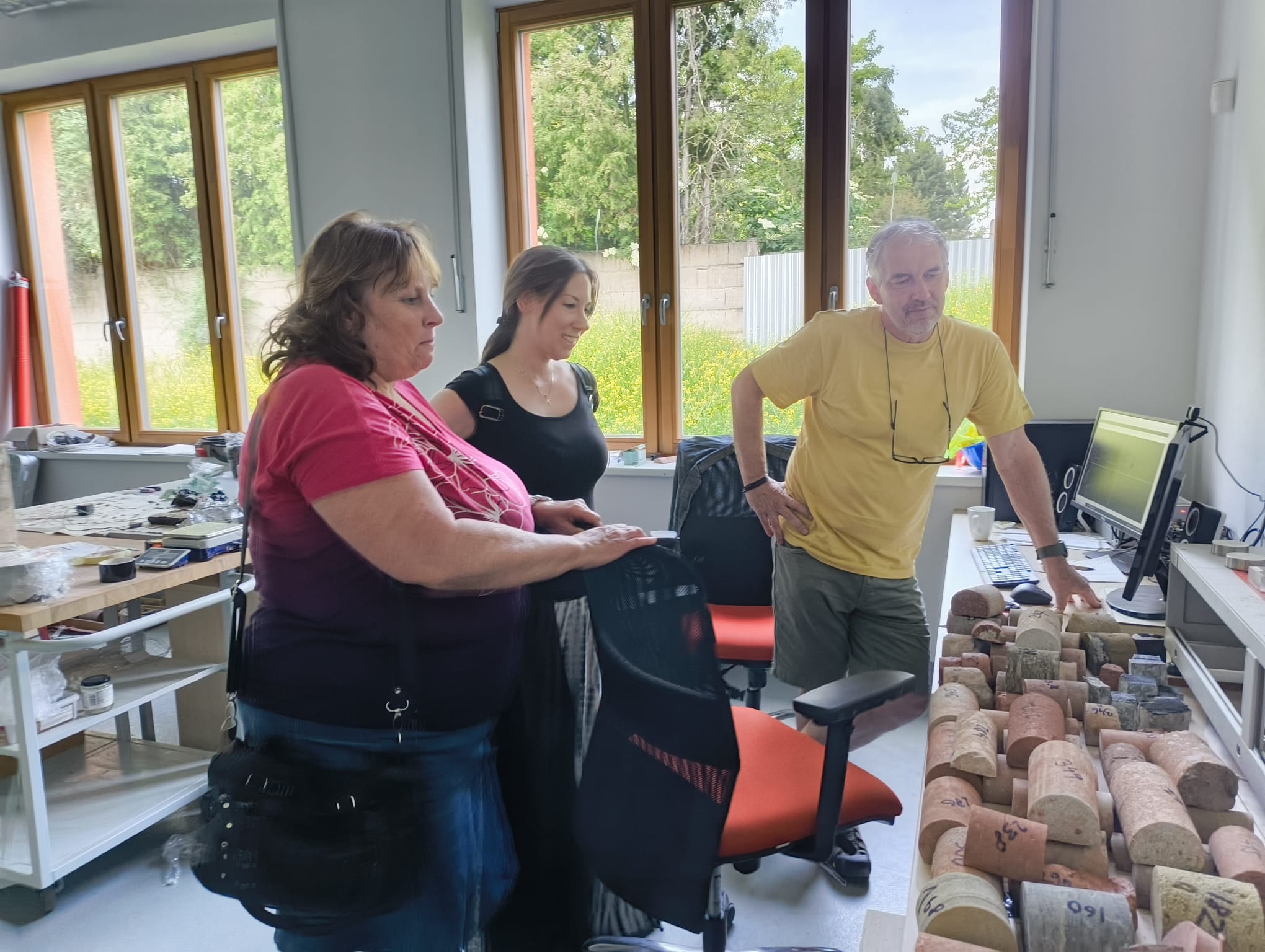
The forum concluded with a presentation on the SYNERGYS project and a tour of the host research center, RINGEN. Participants visited the geothermal laboratory, where scientists are studying the ability of rocks to accumulate and conduct heat.
For the public interested in this topic, further events are being planned as part of the SYNERGYS project. The first of these will be a Public hearing to be held in October 2026 at Litoměřice Castle, where citizens and business owners will obtain further detailed information about SYNERGYS project and planned use of geothermal energy.