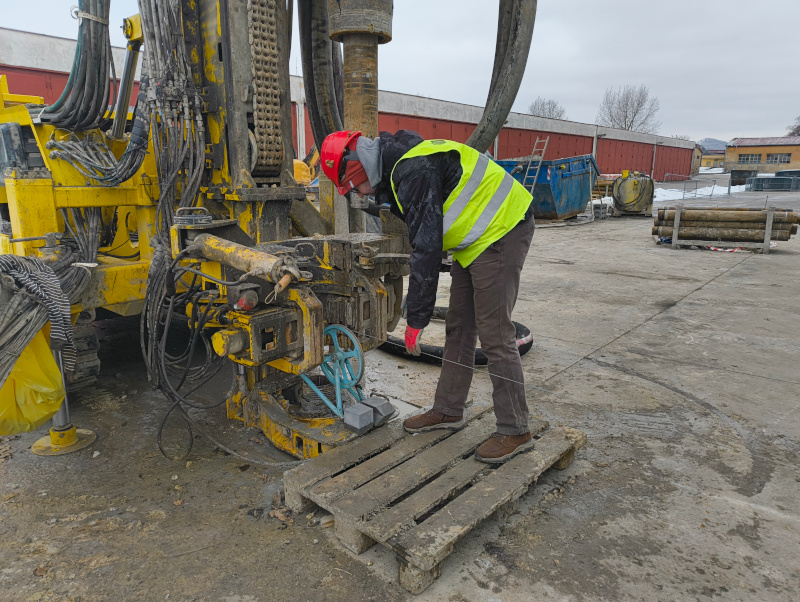

What drilling work is currently underway here?
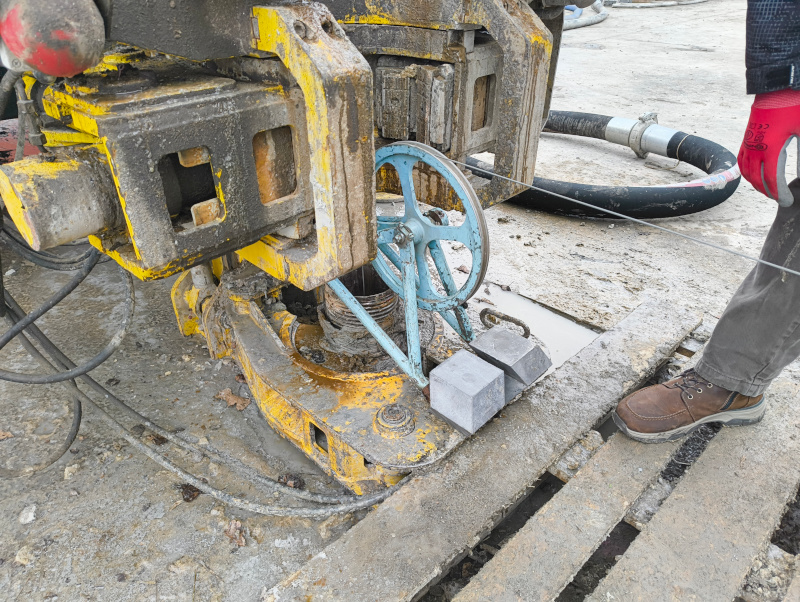
The BTES1 thermal storage project involves a total of seven boreholes, which are divided into two groups according to their purpose. The basis consists of four system boreholes, which serve as heat exchangers. Once completed, these are "equipped" with a probe containing working fluid and an optical cable, and then cemented. From that moment on, they are no longer accessible for further measurements. At this point, two of the four system boreholes have been equipped in this way, the third has just been drilled and is now undergoing geophysical measurements, known as logging.
In addition to the system wells, several monitoring hydrogeological wells will also be created here. Where will they be located and what will they be used for?
The key information for us now is the direction of groundwater flow and thus also heat. The "triangles" of monitoring wells (where each well forms one of the vertices of an equilateral triangle) will help us determine this. Three monitoring geothermal wells will be located in close proximity (only 3 meters) to one of the four system wells. In addition, there will be three pairs of hydrogeological monitoring wells on the site, reaching depths of 100 and 200 meters and monitoring two different aquifers – the Turonian and Cenomanian aquifers.
What does the presence of groundwater mean for heat storage?
While water is a blessing for ordinary wells, it can be a problem for heat storage because the flow of groundwater would carry away the heat. However, there are two aquifers at different depths here. The Turonian aquifer (approx. 60–120 m) is an impermeable formation interwoven with permeable fissures. Water can therefore flow unpredictably here, at various depths and at varying speeds. The sandstones of the Cenomanian aquifer (approx. 140–180 m) behave more like a sponge – water flows here in the pores of the rock itself.
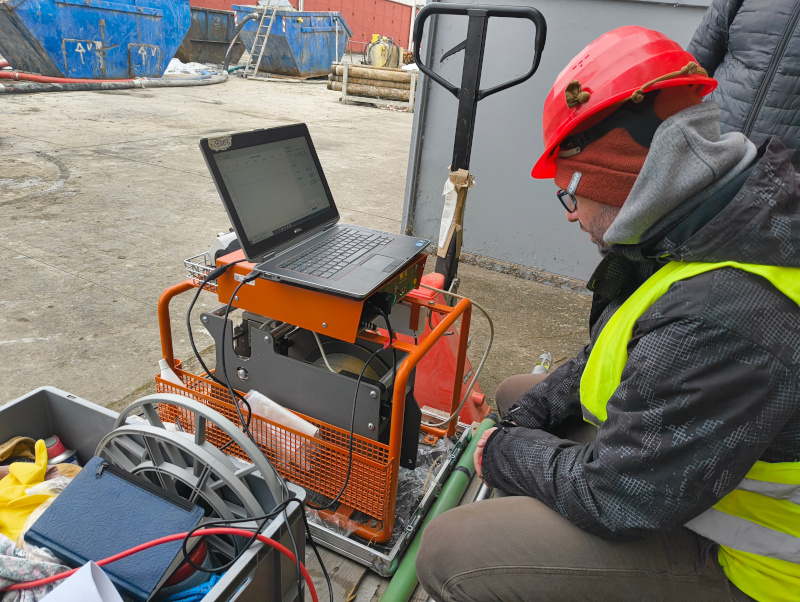
In all wells, the logging takes place immediately after drilling. How would you describe this process?
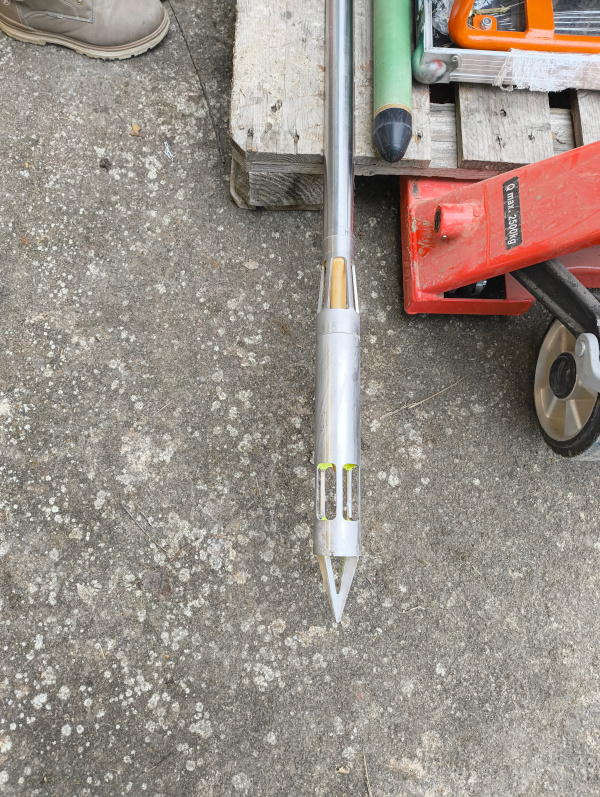
We use special probes to measure the properties of the rock directly in the borehole. We use a cavernometer to measure the radius of the borehole and check that the walls are not collapsing. The walls of the first two system boreholes are straight and without cavities. We detected several cracks, but these do not affect the functionality of the borehole in terms of heat storage. Measuring natural radioactivity (known as gamma activity) helps to distinguish sandstone from clay layers, as clay minerals are generally much more radioactive than sandstone. Later measurements in hydrogeological boreholes using water resistance measurements (resistivity), can help us accurately calculate the flow rate of groundwater.
In addition to these parameters, the verticality of the boreholes is also measured. Why is measuring verticality important?
With a distance of several meters between the boreholes of System 1, their verticality is crucial. If the boreholes deviated at depth, they could intersect and destroy each other. However, initial measurements show excellent results – deviations are only in the order of decimeters, which is proof of the high quality of the drilling technology.
Will further measurements follow after the completion of the four system and three monitoring wells of BTES1?
The borehole system should be completed in mid-March. This will be followed by a Thermal Response Test. We will install a heating cable in the last system borehole, and scientists will monitor how quickly and in what direction the heat spreads to the surrounding three geothermal monitoring boreholes. This will definitively confirm whether the heat will remain underground or whether it will be washed away by groundwater. We will be able to observe temperature changes in the three-meter-distant wells within a few days.